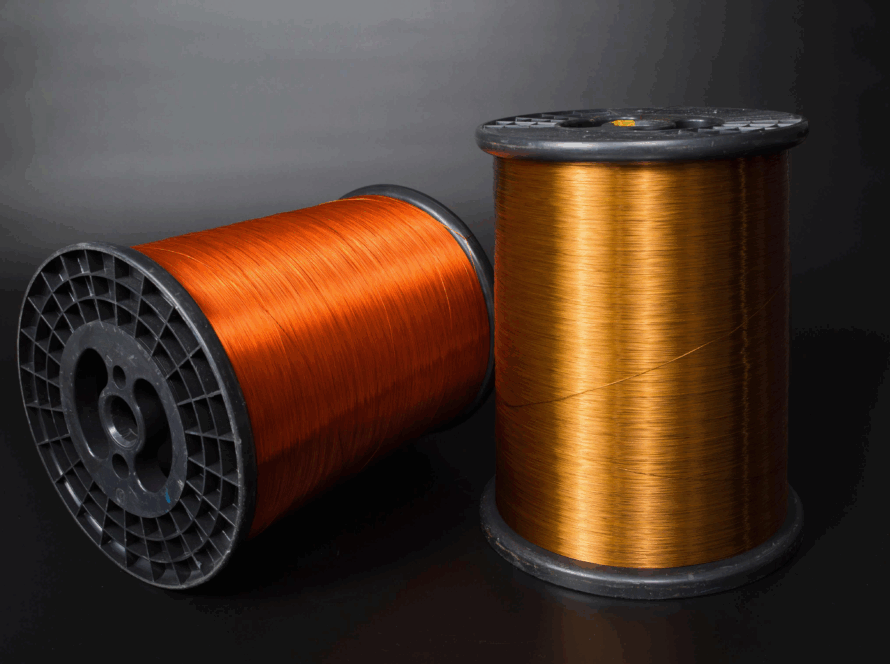
Anyone who has specified wire for a small coil knows the termination step is where the process gets fiddly. Conventional enamel has to come off before the lead can be soldered — mechanically, thermally, or chemically — and that removal step has to be repeatable across every coil you build.
Solderable magnet wire changes the shape of that step: the enamel is formulated to break down during soldering, so the conductor can be tinned directly under specified soldering conditions. Whether that’s the right answer for your coil isn’t automatic, though. It depends on your thermal requirements, your conductor size, and whether your process conditions match the wire’s verified soldering window. This guide walks through how the wire works and what to check before specifying it.
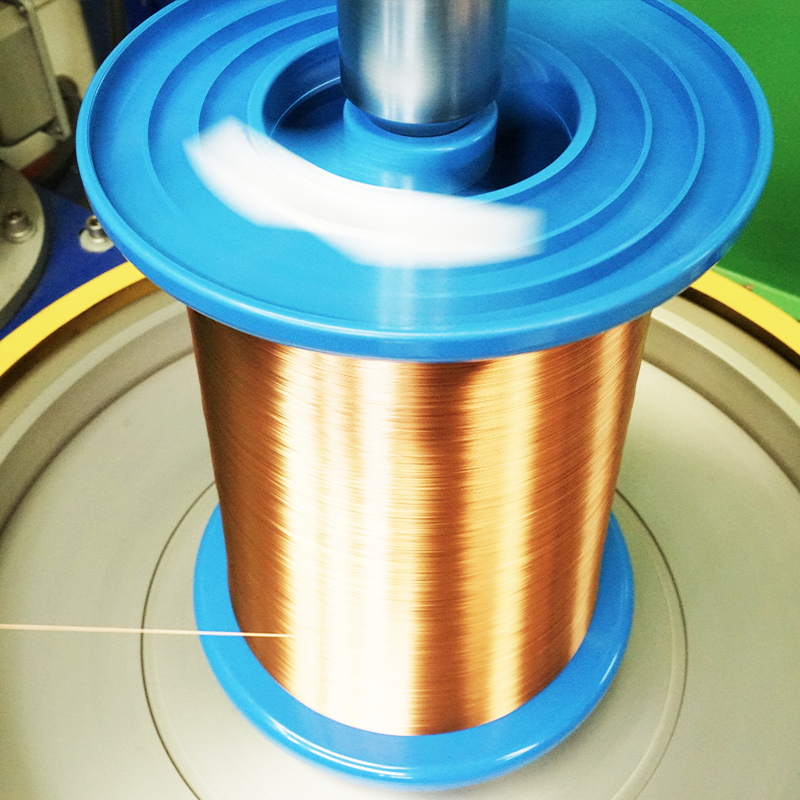
Why Engineers Consider Solderable Magnet Wire
The question usually arrives from the production side rather than the design side. A coil is wound, the leads need to be terminated, and the enamel has to be removed before solder will wet the conductor. With conventional magnet wire that means an added removal step in the sequence: wind, strip, solder.
Solderable magnet wire is built for a different sequence: wind, then solder directly. The enamel system is formulated to break down during the soldering process under specified conditions, letting the conductor tin without a separate removal operation.
That difference is a process-design consideration, not an automatic improvement. Whether it suits a given build depends on what the coil has to survive thermally, what conductor diameter the design calls for, and whether the production line can hold the soldering conditions the wire is specified against. Engineers generally start evaluating solderable wire when the termination step is a repeatability concern, when coils are small and numerous, or when the removal step is awkward to control on fine conductors.
How Does Solderable Magnet Wire Work?
Solderable magnet wire uses a polyurethane-based enamel system. Compared with enamel systems primarily selected for general winding performance, this coating is formulated to break down under specified soldering conditions, so a lead dipped into a solder bath can tin directly under the verified conditions rather than needing the film removed first.
The practical consequence for an engineer is that the “solderability” of the wire isn’t a marketing adjective — it’s a tested property with defined conditions. Jingda’s solderable polyurethane wire is verified by solder-bath testing under the applicable winding-wire test method, with the maximum immersion time determined according to the conductor diameter and the film grade.
A pass is judged on the tinned surface: the solder should be even, with no voids and no residual enamel left on the conductor.
Why this matters during specification review: those conditions are what you check your own process against. If your line solders at a materially different temperature, or your dwell time sits outside the window implied by your conductor diameter and film grade, the wire’s verified solderability doesn’t automatically transfer to your conditions. Request the specification for the exact tested parameters, and treat them as the reference point for that conversation — with your process engineer, and with the supplier.
Solderable Magnet Wire vs Conventional Magnet Wire
Why this comparison matters. For wires of the same conductor size and thermal class, the two wire types differ at exactly one point in the build sequence — the termination. Everything else about winding a coil is broadly the same. Seeing where the difference sits helps you judge whether it’s relevant to your process at all.
| Factor | Conventional magnet wire | Solderable magnet wire |
|---|---|---|
| Terminal processing | Enamel removed before soldering | Tins directly in the solder bath |
| Process sequence | Wind → strip → solder | Wind → solder |
| Enamel design priority | Thermal and mechanical performance | Thermal performance plus solderability under specified conditions |
| Typical consideration | General winding across a wide size range | Small coils and fine conductors where termination is repeated at volume |
What engineers should notice. The comparison is about where the steps sit, not about one wire being better than the other. Conventional enamel remains the right answer across a great many winding applications; solderable enamel is a specific answer to a specific termination problem. The judgement is whether your build is one where the termination step is worth designing around.
Where Solderable Magnet Wire Is Used
Jingda’s solderable polyurethane enameled wire is supplied for small motor coils and magnetic coils. Those are the applications the product is approved and documented for.
More broadly across the industry, and depending on design requirements, direct-soldering enamel is often considered where coils are small, numerous, and terminated at volume — the kind of wound components where a separate stripping operation is disproportionate to the size of the part. The common thread tends to be fine conductors and repeated terminations rather than any single end product.
If your application sits outside small motor and magnetic coil work, that’s a conversation worth having with an application engineer rather than an assumption to make from a datasheet: the wire’s suitability depends on the thermal and process conditions of your specific build.
Engineering Factors Before Selecting Solderable Magnet Wire
Five things determine whether a solderable wire fits a given design. In practice they get checked together, because a choice on one constrains the others.
Soldering temperature and immersion time
Start here, because it’s the factor most likely to rule the wire in or out. Solderability is verified by solder-bath testing under defined conditions, with the maximum immersion time scaled to conductor diameter and film grade. Request the product specification for the exact tested temperature and immersion times, then compare them against what your line actually runs.
Thermal class
The documented product range includes Class 155 and Class 180 options. Each corresponds to its own set of standard and model designations, which are confirmed in the product specification and supplier documentation rather than assumed from the class number alone.
The class should follow the coil’s thermal duty and the insulation system it sits inside — the same thermal class selection logic that applies to any magnet wire. A higher class is not automatically the right choice; it’s the one that matches the application. When cross-referencing against your own internal specification, confirm the applicable standard part and model designation from the supplier documentation for the class you intend to use.
Conductor size
The available diameter range is 0.100–0.800 mm. Solderable enamel is characteristically a fine-wire product, and if your design calls for a conductor outside that range, the specification conversation changes.
Film grade
Grade 1 and Grade 2 differ in film build, and that difference feeds directly back into the soldering window — the immersion-time multiplier is not the same for both. Grade is therefore a soldering-process decision as much as an electrical one.
Application environment and production process
Finally, the conditions the finished coil lives in and the conditions it’s built under. Solderability is verified under defined laboratory conditions; your line’s actual thermal profile, flux, and handling are what determine whether that translates.
Solderable vs Self-Bonding Magnet Wire
These two get confused often enough to be worth separating clearly, because they solve completely different problems.
Solderable magnet wire solves a termination problem. The enamel is formulated to break down at soldering temperature so leads can be tinned directly.
Self-bonding magnet wire solves a coil-forming problem. It carries an additional outer layer that, when activated, bonds adjacent turns to each other so the coil holds its shape without a bobbin or additional support.
One is about getting current out of the coil at the terminals. The other is about holding the coil’s physical form. They are independent properties: a design might need one, the other, both, or neither — and asking for “solderable” when the actual requirement is a self-supporting coil (or the reverse) is a specification error that surfaces late.
Jingda Solderable Polyurethane Enameled Round Wire — Technical Snapshot
Jingda supplies solderable polyurethane enameled round wire in Class 155 and Class 180, in the conductor options documented in the product specification. Direct solderability is verified under the applicable solder-bath test conditions stated in the product specification. The snapshot below covers the selection-level essentials; full dimensional and electrical data, the applicable standard and model designations, and the exact tested soldering conditions sit in the datasheet.
| Attribute | Detail |
|---|---|
| Insulation system | Polyurethane-based solderable enamel |
| Thermal classes | Documented range includes Class 155 and Class 180 |
| Standards and designations | Confirmed in the product specification for the selected class and conductor |
| Conductor | Round; conductor options as documented in the product specification |
| Diameter range | 0.100–0.800 mm |
| Film grade | Documented film grades include Grade 1 and Grade 2; other film builds available on request |
| Solderability | Verified by solder-bath testing; tested conditions stated in the specification |

→ View the Technical Datasheet for complete dimensional and electrical data.
Secondary: Request Technical Support · Request a Sample
Common Questions Engineers Ask About Solderable Magnet Wire
What makes a magnet wire solderable?
The enamel system. A solderable wire uses a polyurethane-based coating formulated to break down during the soldering process under specified conditions, so the conductor tins directly instead of requiring the film to be removed first.
At what temperature is solderable magnet wire soldered?
Solderability is verified by solder-bath testing under the applicable winding-wire test method, with the maximum immersion time determined by the conductor diameter and film grade. The exact tested temperature and immersion times are stated in the product specification — request it and check them against your line’s actual conditions.
Can solderable magnet wire eliminate a separate stripping operation?
Under the verified soldering conditions, the enamel is designed to be removed through the soldering process rather than by a separate stripping step. Whether that changes your production sequence depends on your line’s conditions matching the tested ones — which is a process-engineering check, not a property of the wire alone.
Which thermal classes are available?
The documented product range includes Class 155 and Class 180 options. Each class has its own applicable standard and model designations, which are confirmed in the product specification for the class and conductor you select.
What conductor sizes can I get?
0.100–0.800 mm. Solderable enamel is characteristically a fine-wire product.
Is solderable magnet wire the same as self-bonding magnet wire?
No. Solderable enamel addresses termination — it lets leads tin directly. Self-bonding enamel addresses coil forming — it bonds adjacent turns so the coil holds its shape. They are independent properties and a design may require either, both, or neither.
References & Standards
The technical statements in this article draw on the following standards and product documentation. Standards are referenced by designation; consult the current published editions for the authoritative text.
- IEC 60851 series, Winding wires — Test methods — the family of test methods used for winding-wire properties, including applicable solderability test methods.
- IEC 60317 series, Specifications for particular types of winding wires — the standards family covering polyurethane enamelled round wire by thermal class.
- ANSI/NEMA MW 1000, Magnet Wire — the North American magnet wire designation system.
- Jingda product specification and datasheets, solderable polyurethane enameled round wire — thermal class, conductor, dimensional data and tested solderability conditions.
Product values stated here are taken from the Jingda product specification. Standards are referenced by family; the applicable part numbers and model designations for a given class and conductor are confirmed in the product documentation. Consult the current published editions for authoritative standard text.
If you are evaluating whether direct-soldering wire suits your coil design, the technical datasheet sets out the full specification — or discuss the soldering and thermal requirements with Jingda’s engineering team.
View the Technical Datasheet · Request Technical Support · Request a Sample