


Oxygen-free Copper Rod
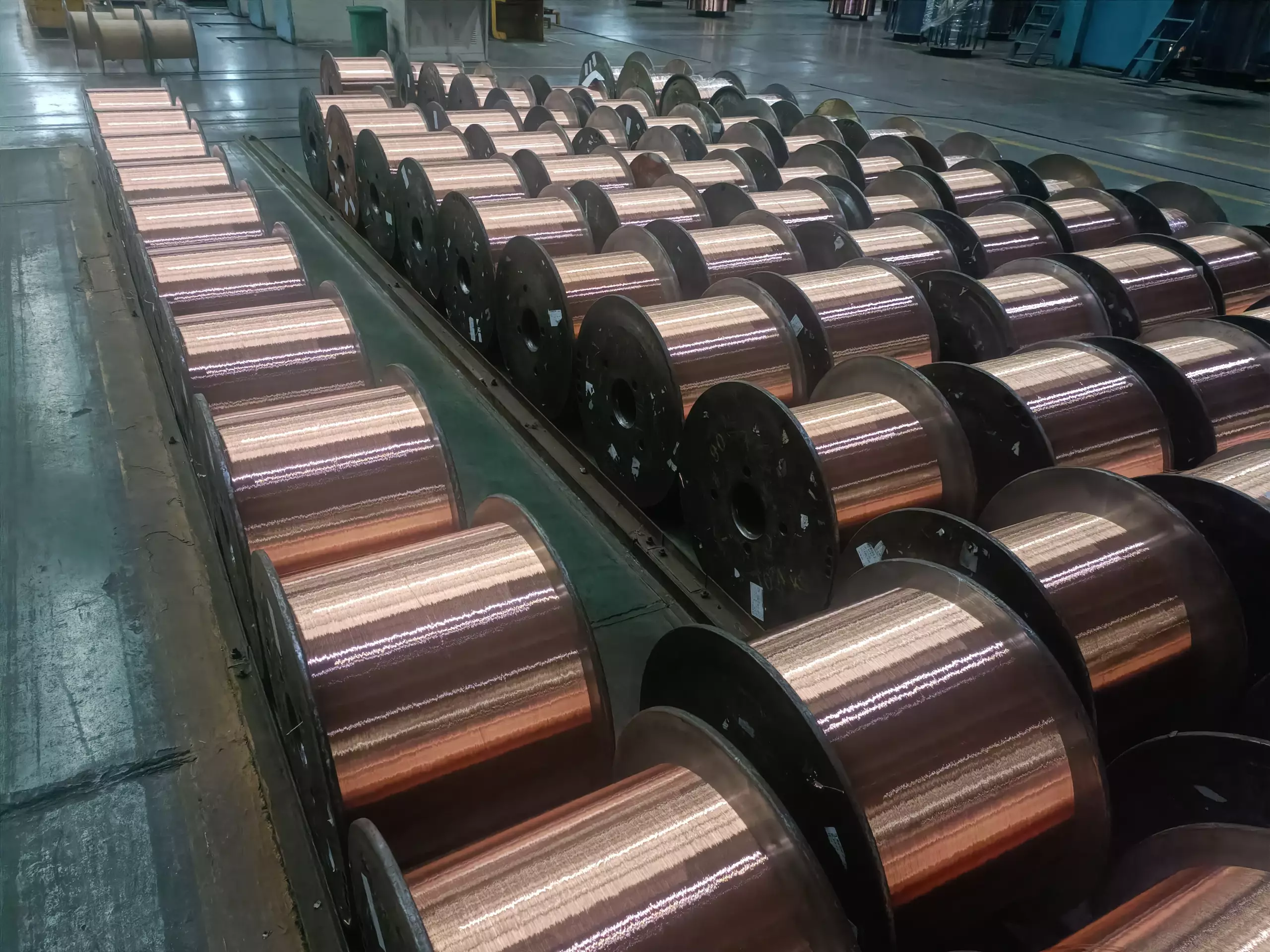
Continuous-cast oxygen-free copper rod for drawing into wire, cable and magnet wire. Oxygen content is held to 5 ppm or below and resistivity to 0.017241 Ω·mm²/m at 20 °C, so the rod draws cleanly to fine sizes without brittle breaks.
- Rod diameter
- 2.5 · 3.5 · 4.0 · 8.0 mm
- Oxygen content
- ≤ 5 ppm
- Resistivity
- ≤ 0.017241 Ω·mm²/m
at 20 °C - Elongation
- ≥ 40 %
What Is Oxygen-free Copper Rod?
Oxygen-free copper rod is continuous-cast copper rod in which dissolved oxygen has been held to a few parts per million. Oxygen in copper forms cuprous-oxide particles at the grain boundaries; those particles are where a drawing die starts a break and where hydrogen embrittlement begins during annealing. Holding oxygen at 5 ppm or below gives a rod that draws down to fine wire with fewer breaks and anneals to a softer, more ductile conductor.
Cast and drawn in one plant
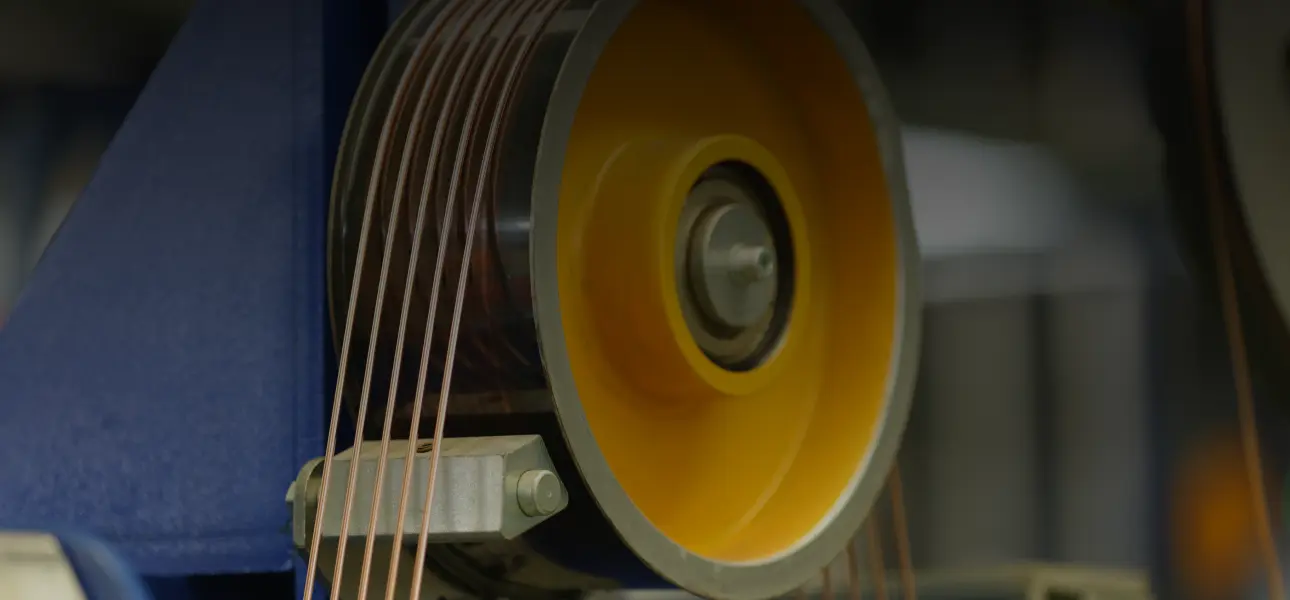
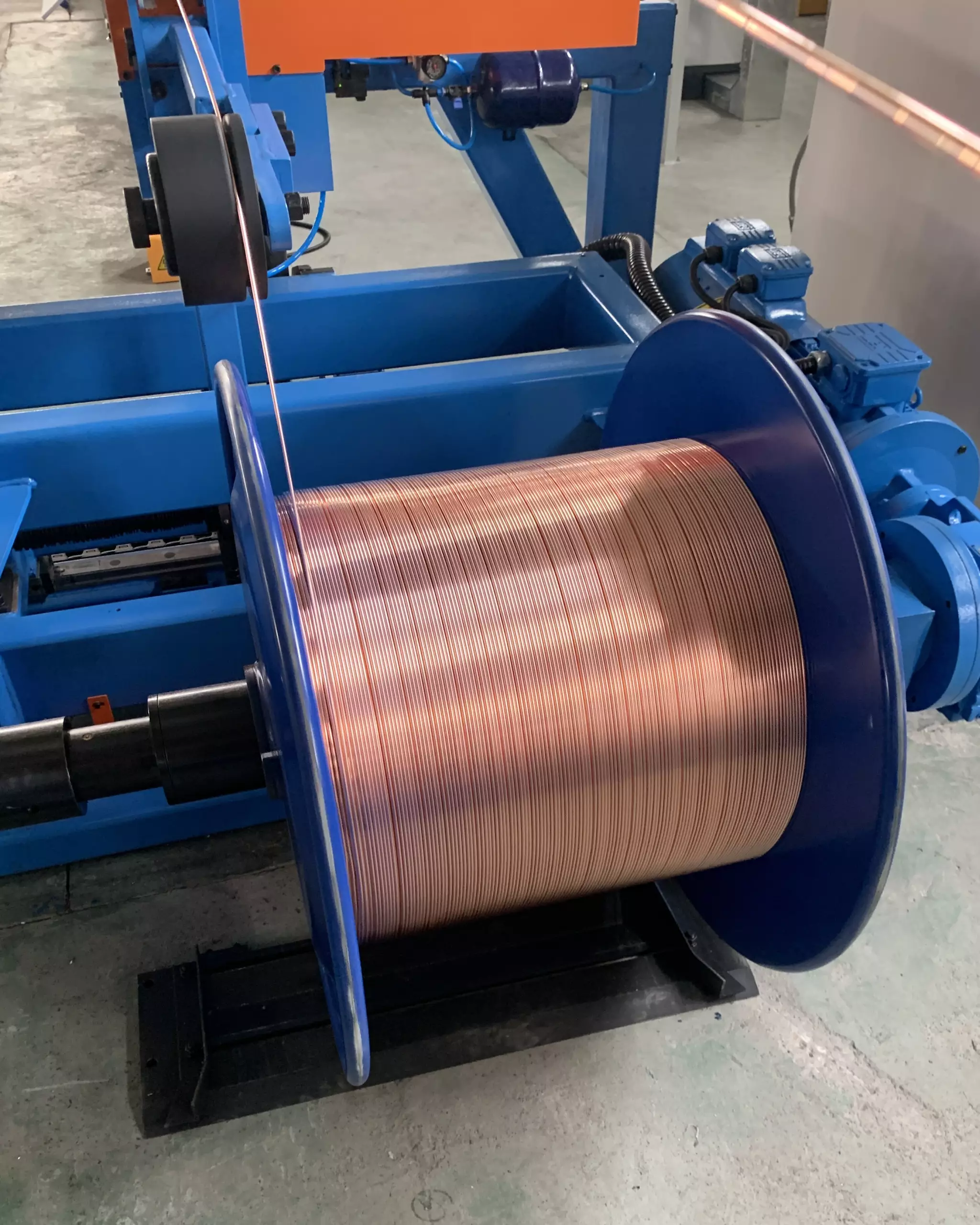
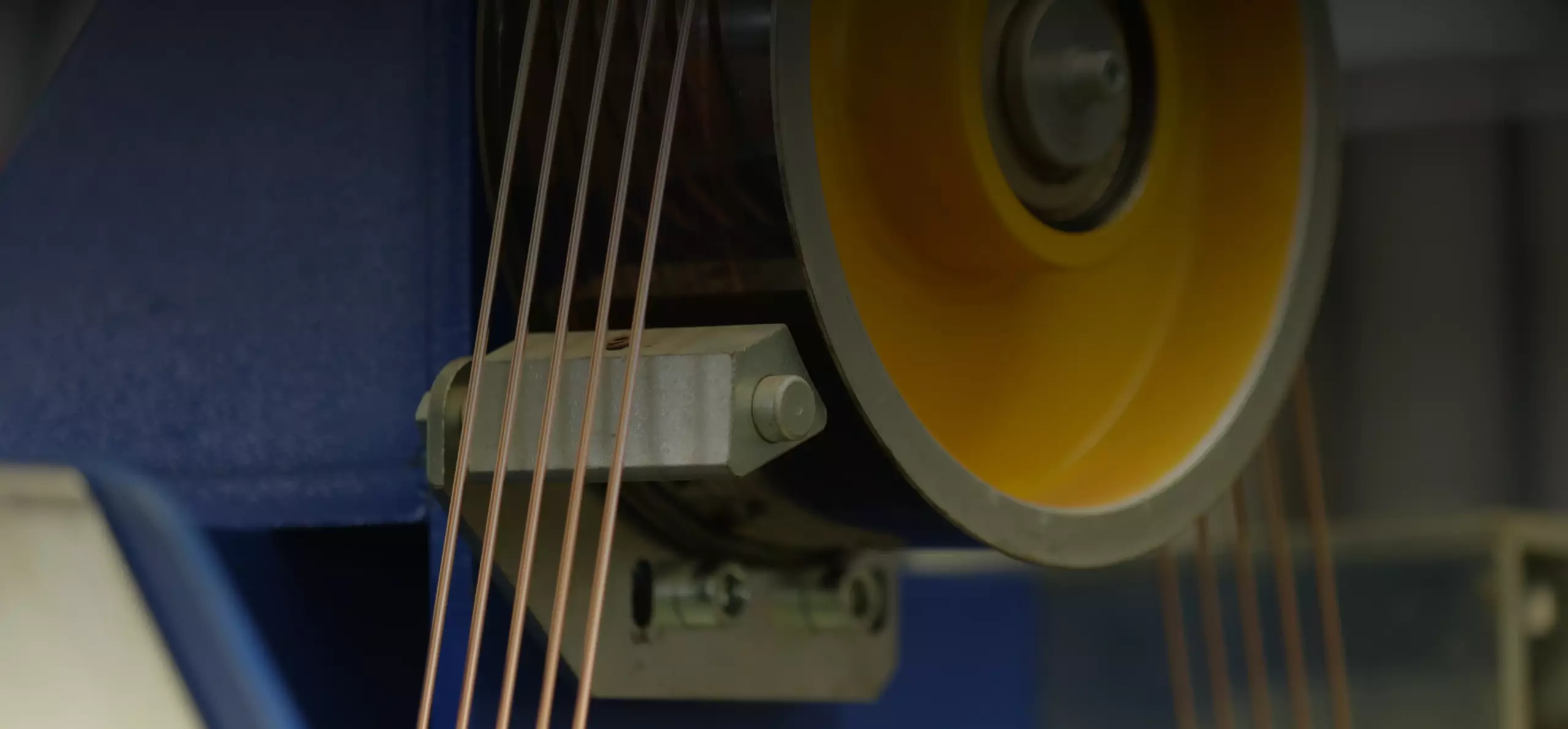
Jingda casts its own rod and draws it in the same plant on rod-breakdown and multi-wire lines from SAMP, Niehoff and Fridea. That means the rod supplied to customers is the same rod Jingda uses for its own bare, stranded and enameled wire — and that the casting parameters are already tuned to what a drawing line needs, rather than to a general commodity specification.
What you get
- Oxygen content held to ≤ 5 ppm across the cast
- Resistivity ≤ 0.017241 Ω·mm²/m at 20 °C — the 100 % IACS reference value
- Elongation ≥ 40 % for reliable drawing to fine sizes
- Non-oxidised, burr-free surface with no rolled-in scale
- Coils of up to 800 kg on wooden pallets, sized for automatic pay-off
Jingda Copper Conductor Range
Rod is the feedstock. Everything else in the range — bare wire, stranded conductor, parallel wire and enameled magnet wire — is drawn from it, so the rod specification sets the ceiling for every product downstream.
| Product | Form | Size range | Standards | Typical use |
|---|---|---|---|---|
| Bare Copper Wire | Solid round wire | 0.25 – 3.00 mm | GB · IEC · DIN · ASTM · JIS | Cable conductor, grounding, drawing stock |
| Stranded Bare Copper Wire | Bunched strands | 0.14 – 11.3 mm² | GB · IEC · DIN · ASTM · JIS | Flexible cable, automotive and electronic wire |
| Parallel Wire | Parallel-bonded wires | 0.05 – 0.85 mm single wire | GB · IEC · DIN · ASTM · JIS | UHV cable, enameled wire, communication wire |
| ViewingOxygen-free Copper Rod | Rod | 2.5 – 8.0 mm | GB · IEC · DIN · ASTM · JIS | Drawing feedstock for wire and cable |
| Enameled Copper Wire | Insulated round wire | 0.100 – 4.500 mm | IEC 60317 · NEMA MW 1000 | Motor and transformer windings |
Looking for a high-frequency conductor? See litz wire, or the full enameled wire range.
Oxygen-free Copper Rod Specifications
| Rod diameter (mm) | Tolerance (mm) | Surface | Resistivity (Ω·mm²/m at 20 °C) | Oxygen content (ppm) | Elongation (%) | Coil / pallet Ø (mm) | Max weight (kg) |
|---|---|---|---|---|---|---|---|
| 2.5 | 0.00 ~ 0.03 | Non-oxidised, burr-free | ≤ 0.017241 | ≤ 5 | ≥ 40 | 800 | 800 |
| 3.5 | −0.035 ~ 0.035 | Non-oxidised, burr-free | ≤ 0.017241 | ≤ 5 | ≥ 40 | 800 | 800 |
| 4.0 | −0.040 ~ 0.040 | Non-oxidised, burr-free | ≤ 0.017241 | ≤ 5 | ≥ 40 | 800 | 800 |
| 8.0 | −0.40 ~ 0.40 | Non-oxidised, burr-free | ≤ 0.017241 | ≤ 5 | ≥ 40 | — | — |
Performance and Applications
Jingda oxygen-free copper rod is drawn into building and power cable conductor, automotive and electronic wire, flexible stranded conductor, and magnet wire for motors and transformers. It is also used where the conductor feeds new-energy applications — battery and drive-motor windings, charging cable and busbar — in which conductivity and annealed ductility are both critical. Other diameters and coil sizes are produced on demand.
Inside the Plant
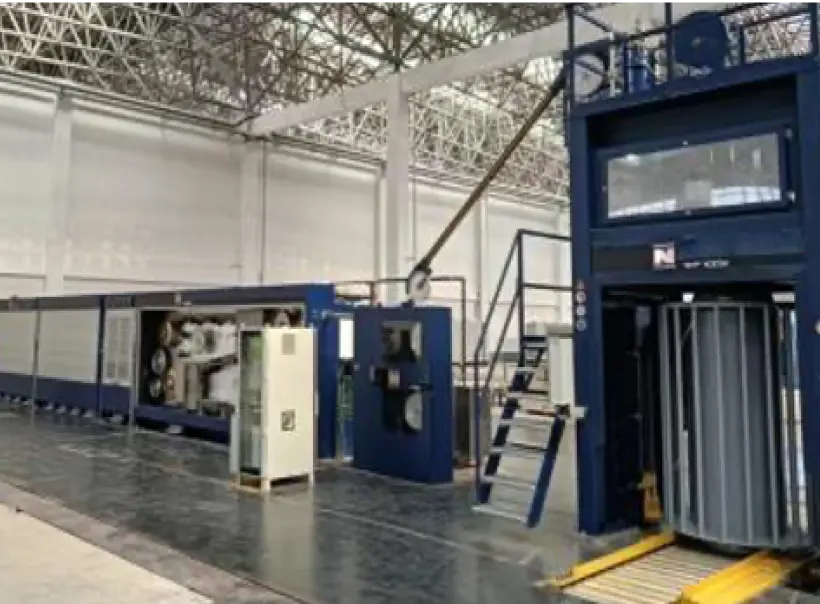
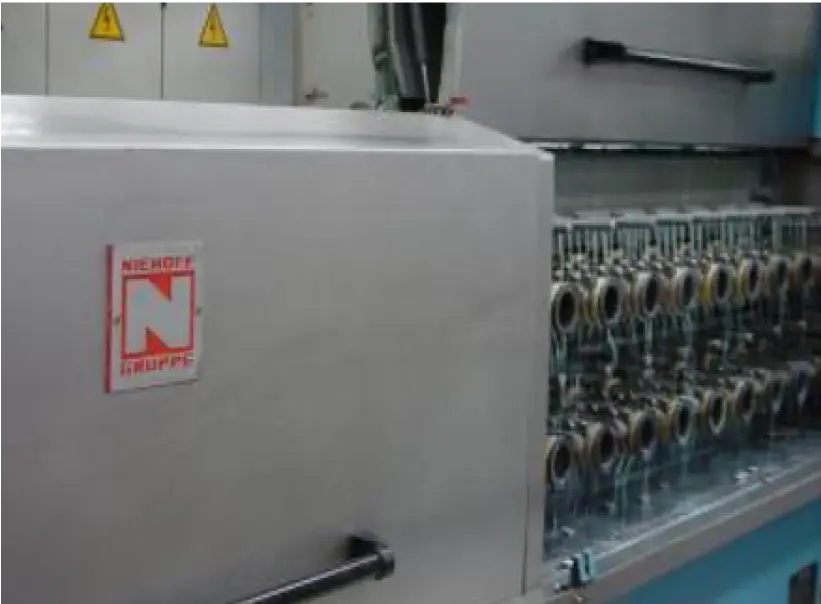

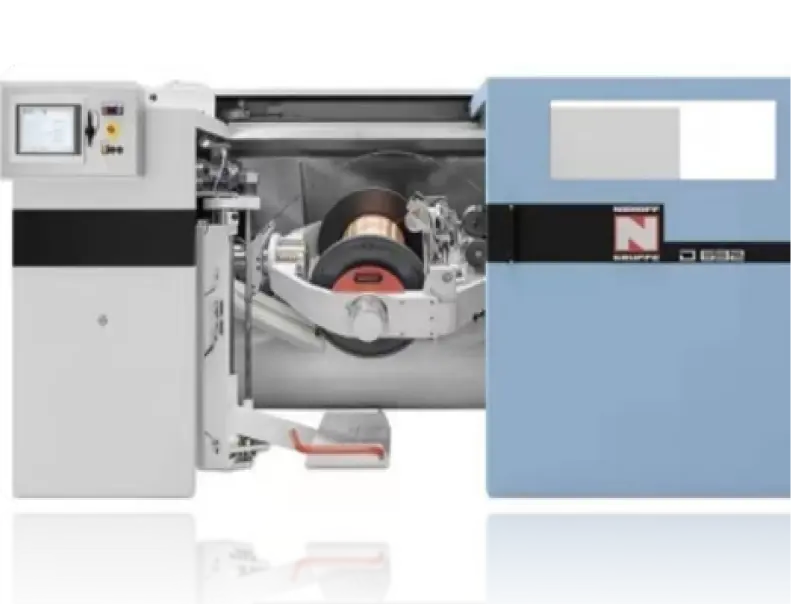
Quality and Compliance
Jingda operates an ISO 9001 and IATF 16949 certified quality system, with ISO 14001 and ISO 45001 covering environment and occupational health. Oxygen content, resistivity and elongation are verified per cast in Jingda’s CNAS-accredited laboratories, and results are held against the cast number.
Technical Data Sheet
Rod diameter, tolerance, oxygen content, elongation and coil size are set per order. Send your drawing schedule and a Jingda engineer will return a full data sheet with the quotation.
Talk to an EngineerQuality Certificates
Substance Compliance
RoHS and REACH statements covering the copper rod are issued with the order.
Tongling Jingda Special Magnet Wire Co., Ltd.
We are one of the world’s leading magnet wire manufacturers, based in Tongling City — one of China’s principal copper production bases. Listed on the Shanghai Stock Exchange since 2002 (600577), the group runs a national-level enterprise technology centre, a national-level postdoctoral research station and the Jingda Magnet Wire Research Institute.
Jingda magnet wire is wound into products across new-energy vehicles, photovoltaics, robotics, aerospace, home appliances, specialty motors, 5G communications and electronics.
Ordering, Packaging and Delivery
| Commercial term | Detail |
|---|---|
| Minimum order quantity | Agreed per rod diameter. Trial-coil quantities are agreed case by case. |
| Lead time | Normally within 30 days from order confirmation; stock diameters dispatch earlier where available. |
| Incoterms | FOB by default; other Incoterms on request. |
| Quotation response | Within 1 business day. |
Packaging and shipment — copper rod
Rod is supplied in continuous coils of up to 800 kg, banded and set on fumigation-free wooden pallets of Ø 800 mm sized for automatic pay-off. Coils are wrapped to protect the surface from oxidation in transit and the load is secured with stretch film and steel strapping.
Coil weight and pallet build are confirmed per order and can be adapted to your pay-off equipment.
Frequently Asked Questions
Why does oxygen content matter in copper rod?
Which rod diameters does Jingda supply?
What conductivity can I expect?
How is the rod packed?
Can Jingda supply rod for magnet wire drawing?
Can we become a Jingda distributor or agent?
How does Jingda support customers after the order?
Request a Quote or Sample
Tell us your specification — a Jingda sales engineer will respond within 1 business day with a quotation or technical feedback.
