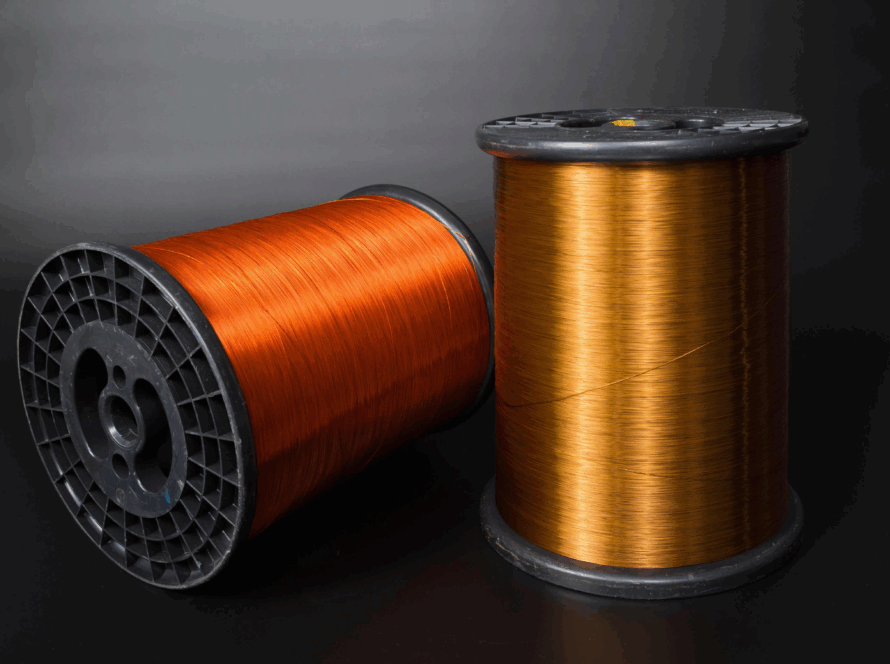
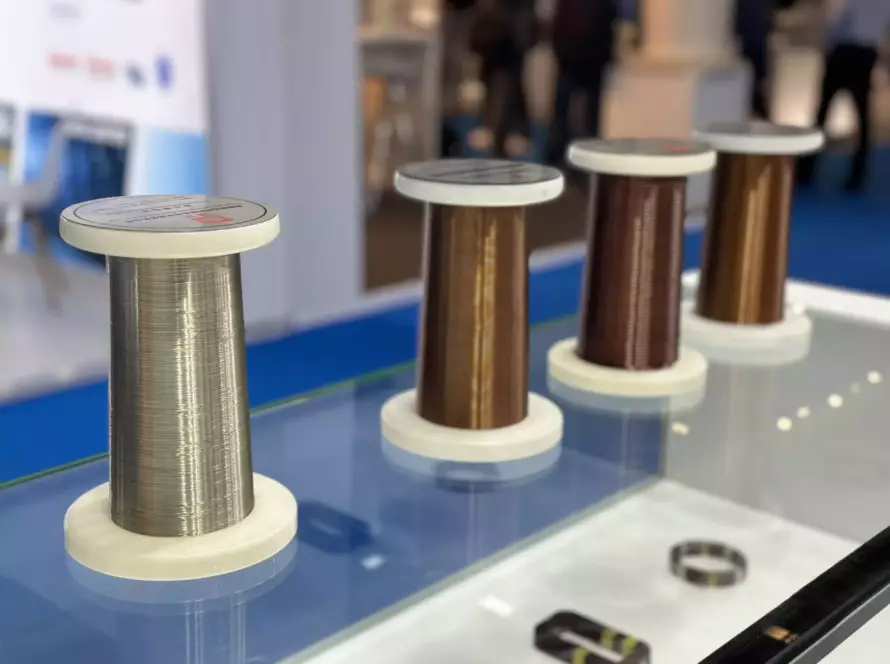
A DC motor’s performance often hinges on an unseen yet critical component: the tightly wound Enameled Copper Wire inside. This isn’t ordinary wire—it’s a specialized part that directly controls the motor’s efficiency, durability, and power output. Selecting the right wire can mean the difference between a motor that delivers reliable performance for years and one that fails prematurely. The key lies in optimizing conductivity, insulation, and heat resistance to unlock your motor’s full potential.
Wire Types by Insulation System
Enameled Copper Wire consists of two critical components:
- The Copper Core
- Copper is the undisputed choice for motor windings because its electrical conductivity is surpassed only by silver, making it the most practical and cost-effective option. Higher conductivity reduces energy loss as heat, ensuring more power is converted into mechanical work. Copper is also remarkably strong and flexible, allowing it to be drawn into ultra-fine strands and tightly wound into coils without breaking—a process that puts the material under a lot of stress.The Enamel Insulation
The copper core is wrapped in a thin but sophisticated polymer coating—far more than just “enamel”. This enamel layer electrically isolates each winding, preventing short-circuit that would render the motor inoperable. The coating must withstand the rigors of the winding process and endure for the motor’s entire lifespan, even in tightly packed configurations.
Together, the copper core and its enamel insulation form the foundation of an efficient, powerful and durable motor.
Selecting Conductor Size
A wire’s gauge—its diameter—is one of the most critical specifications in motor design. It creates a fundamental trade-off between power and speed. The American Wire Gauge (AWG) system is standard, where lower numbers indicate thicker wires and higher numbers mean thinner ones. Engineers must select the optimal diameter for the available space inside the motor’s stator, a decision that directly impacts how many times the wire can be wrapped and the winding’s total electrical resistance.
Thicker Wire (Lower Gauge)
Thick wires have lower resistance, allowing greater current flow without excessive heat generation. This leads to a more efficient motor that can handle higher loads. Motors wound with thicker Enameled Copper Wire tend to produce more torque, or turning force, at lower speeds. However, the trade-off is that fewer turns of a thick wire can fit into the winding slots. This design is ideal for applications requiring raw power and strength, such as industrial machinery or automotive starters.
Thinner Wire (Higher Gauge)
Thinner wires enable more turns within the same space, . More turns create a stronger magnetic field for the same amount of current, which lets the motor spin at much higher speeds. The compromise is that a thinner wire has higher resistance, which limits how much current it can safely handle and creates more heat. This configuration suits high-speed, low-torque applications with moderate current demands, such as small fans, robotic components, or medical tools.
Grade 1 vs Grade 2 vs Grade 3
Once the wire’s diameter is determined, the next critical consideration is its insulation. The enamel coating prevents short circuits between adjacent wires.. The key factor in selecting an enamel is its thermal class, a rating that indicates the maximum continuous temperature it can withstand before it starts to break down. Choosing the right enamel that can take the heat is essential for the motor’s durability and performance.
Leading suppliers like Jingda offer a variety of enamel types to suit different applications. Here’s a breakdown of the most common options:
- Polyurethane (Class 130/155): A popular choice for smaller motors and electronics, polyurethane enamel’s standout feature is its solderability without stripping——a major time-saver in high-volume production. However, it’s best suited for applications with moderate operating temperatures
- Polyester (Class 155/180): This enamel offers superior heat resistance and mechanical durability, making it resistant to scrapes and abrasion. It’s a reliable option for general-purpose motors and transformers, though it usually needs to be mechanically stripped before soldering.
- Polyester-imide (Class 180): This is a modified polyester with even better heat and chemical resistance, holding up well against common solvents. It strikes an ideal balance between cost and performance, making it a preferred choice for demanding applications like air conditioning motors.
- Polyamide-imide (Class 200/220): Often found as a tough topcoat over a polyester-imide base, this dual-layer system represents the highest tier of insulation. With exceptional heat resistance and mechanical strength, it’s reserved for critical applications—such as aerospace, heavy industry, and high-performance automotive systems—where failure is not an option.
Matching Thermal Class to Duty Cycle
Selecting the right enameled wire requires balancing multiple properties to suit the motor’s specific operating conditions. Here’s how different applications drive the choice of wire gauge and insulation: .
- Automotive Motors: The demanding automotive environment —, with its temperature fluctuations and constant vibration— requires wires with exceptional heat resistance and durability. For components like window lifts or radiator fans, Polyester-imide (Class 180) or dual-coated Polyamide-imide (Class 200) is often selected, typically in a thicker gauge to deliver high torque.
- Industrial Machinery: Industrial motors (e.g. for pumps or conveyors) often operate continuously under heavy loads, generating significant heat. Reliability is critical to prevent failures, making Polyamide-imide (Class 200/220) the standard choice due to its superior thermal and chemical resistance.
- Micro DC Motors: In compact devices like drones or medical instruments, minimizing size and weight is paramount. These motors use ultra-fine wires to accommodate in the high number of turns needed for rapid response and high speeds. Solderable Polyurethane (Class 155) wire is ideal for these tiny applications.
- High-Performance BLDC Motors: Brushless DC motors—used in electric vehicles and premium power tools—demand peak efficiency and power. These motors operate at the edge of component limits, necessitating Enameled Copper Wire with the highest heat rating, almost exclusively Polyamide-imide (Class 220).
Specification Checklist
To ensure precise wire selection, providing a clear spec sheet to your supplier is essential. It prevents errors, failures, and delays. The checklist should include:
- Conductor Material: High-purity oxygen-free copper.
- Wire Gauge/Diameter: Nominal conductor diameter (mm or AWG) with tolerances.
- Enamel Insulation Type:
- Enamel type (e.g., Polyester-imide base + Polyamide-imide topcoat).
- Thermal class rating(Class 180/200/220)
- Insulation build (Single/Heavy/Triple)
- Compliance Standards: Applicable industry standards (e.g.,
NEMA MW 1000-C, IEC 60317).
- Packaging Requirements
Spool Size and Type compatible with winding equipment.
- Performance Specifications
1. Solderability requirements
2. Minimum breakdown voltage.
- Logistics
1. Order quantity
2. Required delivery schedule.
Summary: Choosing by Application
The winding system represents the core determinant of DC motor capability. . The choice of Enameled Copper Wire isn’t a minor detail—it’s a foundational decision that shapes the final product. By carefully matching the wire’s gauge and enamel to the application, you build in efficiency and durability from the outset, ensuring your motor delivers the performance it was designed for.