


Electric vehicles are gaining popularity at a rapid pace, and the sector is experiencing a boom. The boom is driving automobile manufacturers to seek out advanced materials and components. The focus is no longer solely on bigger batteries or faster charging. Instead, significant innovations are unfolding behind the scenes in often over looked areas—such as flat enameled wire. This particular wire is a small device that’s making a big difference in the way electric vehicles are manufactured, allowing them to pack more power into a smaller space and extract greater energy out of it.
The Core Advantage: What Makes Flat Enameled Wire Special
When it comes to enhance the performance of car electrical systems, the selection of appropriate wire is critical. Flat enameled wire stands out as a preferred choice because it offers unique advantages that influence both the vehicle design and operational efficiency.
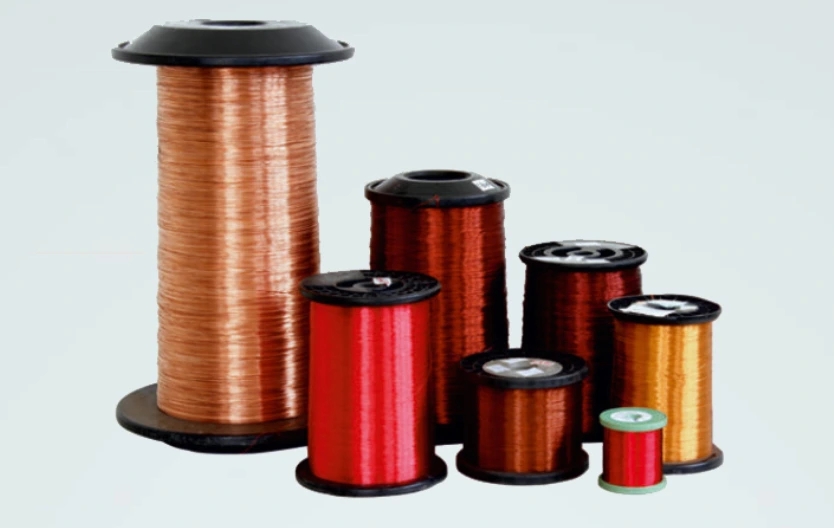
In contrast to round wire, flat wire has a rectangular or square shape. Simliar to its round counterpart, , it consists of a copper conductor insulated by an enamel coating to prevent electrical leakage. This seemingly small change in shape leads to big improvements in automotive components such as motor coils, transformers, and inductors.
Optimizing Space Utilization
Flat wire makes efficient use of space, which is one of its main advantages. Its rectangular shape eliminates the air gaps typical of round wire, allowing more copper to be packed into the same area.
This space efficiency is a boon for automakers striving to reduce component size and weight. For electrical vehicles, miniaturization and weight reduction enable longer driving ranges on a single charge or lower gas consumption.
Revolutionizing Heat Control
Heat dissipation is a critical aspect of vehicle electrical equipment. Excessive temperatures can reduce component lifespan and reduce operational efficiency. In this case, flat wire offers a solution: its larger surface-area-to-volume ratio compared to round wire provides inherent thermal advantages.
Because this surface is bigger and flatter, heat can move to the air or cooling system around it more easily. This enhanced thermal conductivity enables superior heat dissipation. This makes the thermal efficiency better, which lets parts work at higher power levels without getting too hot.
Enhancing electrical performance
The skin effect and the proximity effect can induce significant electrical losses in high-frequency applications, which can change how well the system works generally. The shape of flat wire reduces these losses by optimizing the conductor’s surface-to-volume ratio.
There are measurable gains in electrical efficiency, especially in switching applications that are common in the power electronics of electric vehicles. By minimizing energy waste, flat wire enhances power delivery to the drivetrain, directly contributing to improved vehicle performance and extended range.
Why Electric Vehicles Embrace Flat Wire Technology
Electric vehicles (EVs) demand peak performance, compact size, and optimal efficiency, making flat enameled wire an ideal solution. The unique advantages of flat wire perfectly align with the rigorous requirement of EV systems.
Traction motors, the driving force behind EVs, are increasing adopting hairpin wingdings made from flat wire. These motors can produce more power while being smaller than those using traditional round wire. The tight windings enabled by flat wire reduce end-winding length, minimizing copper usage and electrical losses.
Flat wire also boosts the performance of power electronics modules, such as inverters and on-board chargers. These systems run at high speeds, and flat wire helps cut down on energy loss, leading to better overall efficiency.
Wireless charging systems represent another domain where flat wire is gaining traction. These systems run at high frequencies and are very sensitive to energy loss in the wires. Flat wire’s superior performance at high frequencies makes it a clear winner for these applications.
Next-Generation PEEK Material Innovation
Advanced Insulation Technology
While standard enamel coatings suffice for most automotive applications, extreme operating conditions demand advanced materials. PEEK (Polyether Ether Ketone) insulation represents a breakthrough in wire technology, providing exceptional thermal stability and chemical resistance.
PEEK can maintain its properties over a much wider temperature range than regular enamels, typically from -70°C to +250°C continuously. This thermal resilience is critical for components positioned near heat sources or in harsh under-the-hood environments.
This material is also highly resistant to automotive fluids, including coolants, brake fluids, and various chemicals encountered during manufacturing and maintenance. This resistance to chemicals means longer component lifespan and less need for maintenance.
Jingda’s PEEK Wire Development
Jingda’s PEEK flat wire technology stands as an industry leader, developing production processes that preserve the material’s superior qualities and ensure precise dimensional control necessary for automotive applications. The PEEK flat wire demonstrates performance comparable to high-quality aerospace-grade conductors, bringing aerospace-level reliability to the automotive industry.
The company’s engineering focus is on achieving the optimal balance of thermal performance, mechanical performance, and cost efficiency. This approach ensures PEEK flat wire remains cost-competitive for mass-scale automotive production while delivering the performance advancements essential for next-generation vehicles.
Top-Notch Manufacturing and Quality for Flat Enameled Wire
Precision Manufacturing Process
Producing high-quality flat enameled wire requires state-of-the-art manufacturing processes and rigorous quality control. Round wire is first flattened using specialized machinery. This has to be done just right or the strength of the wire will be compromised and it won’t be exactly the size it needs to be.
Flattening is a critical step: .Excessive pressure can weaken the conductor or damage the enamel insulation, while insufficient pressure results in an uneven profile. Leading manufacturers employ advanced techniques to gently shape the wire, continuously monitoring stress levels throughout the process.
Critical Quality Parameters
There are a bunch of things that have to be just right to ensure top quality. The width and thickness of the wire has to be close to perfect so that it will work efficiently in electrical applications. Enamel insulation must be uniformly applied; thin spots in the coating can lead to electrical failure under high loads. The enamel must withstand high voltage and thermal stress without degradation.
Real-Time Monitoring Systems
Top-tier manufacturers utilize computerized systems to monitor the production process in real time. These systems continuously verify wire dimensions and test enamel integrity, enabling early detection of anomalies before they affect the entire batches. This proactive approach minimizes material waste and ensures consistent functional reliability.
Contact Jingda Today for Your Flat Wire Solutions
Flat enameled wire technology is revolutionizing automotive electrical systems through its superior space efficiency, thermal management, and electrical performance. As the industry evolves toward electric and autonomous vehicles, this technology has become critical for gaining a competitive edge. Manufacturers who collaborate with experienced flat wire suppliers today will be better positioned to meet future performance demands and exceed market expectations.


 English
  Japanese
  Spanish
  Chinese