


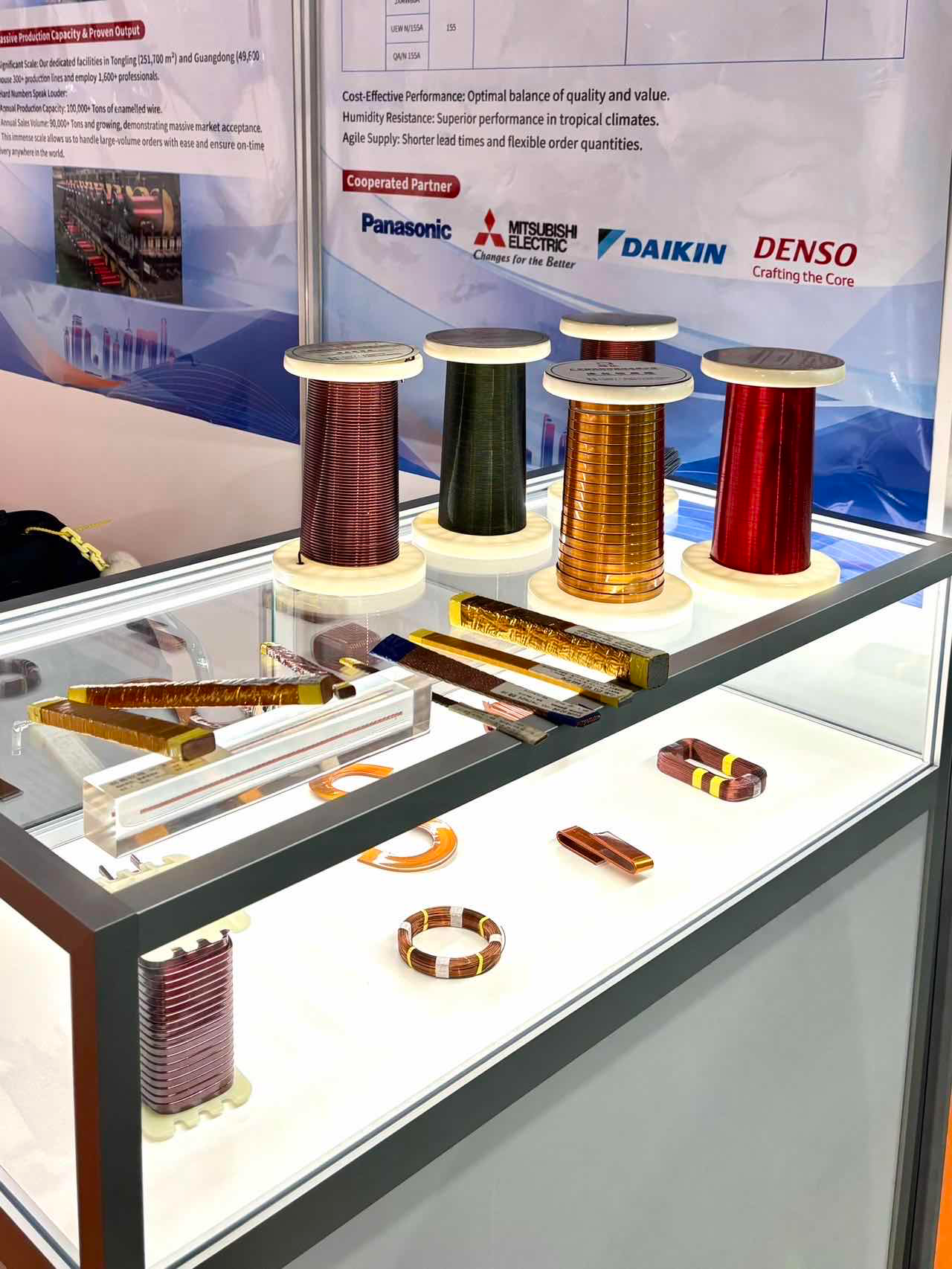
The push for electric vehicles (EVs) with longer range and thrilling performance comes down to engineering challenges deep inside the motor. One of the most significant breakthroughs is the shift from traditional round copper wires to flat wire windings. By using rectangular “magnet wires,” automakers can build motors that are smaller, more powerful, and dissipate heat far more effectively. This is the technology that unlocks the next level of EV capability.
However, not all flat wire motors are created equal. The manufacturing method used to wind the wire is critical. The three dominant technologies today—Hairpin, I-Pin, and Continuous Wave winding—each offer a unique balance of performance, reliability, and manufacturing complexity. This guide breaks down how each one works and why it matters for the future of electric mobility.
At-a-Glance Comparison: Winding Methods
| Feature | Hairpin Winding | I-Pin Winding | Continuous Wave Winding |
| Primary Advantage | High power density; a mature, proven technology. | Extremely simple conductor shape. | Virtually no welding joints required. |
| Main Challenge | The complex welding process on one stator end. | Requires welding on both ends, doubling complexity. | Highly complex wire forming; an emerging process. |
| Best For | High-volume, mass-market EV production. | Niche applications where pin simplicity is key. | Future high-reliability, premium motors. |
| Reliability | High, but weld quality is the critical factor. | Lower, as more weld points increase failure risk. | Potentially the highest due to lack of welds. |
1. Hairpin Winding: The Proven Champion of EV Motors
Hairpin winding is the current gold standard in the EV industry, adopted by major automakers for its exceptional balance of performance and scalability. The name comes from the U-shaped conductors that are pre-formed before being inserted into the stator slots.

How It Works
- Forming: A continuous flat wire is cut and bent into a precise “hairpin” or “U” shape.
- Insertion: Dozens of these hairpins are inserted into the insulated slots of the stator core.
- Connection: The open ends of the hairpins are twisted and precisely welded together, often with lasers, to create a continuous electrical circuit.
Key Advantages
- Exceptional Power Density: Hairpin windings achieve a very high slot fill rate (often over 70%), which is a measure of how much copper is packed into the available space. More copper equals more power and torque from a smaller motor.
- Superior Thermal Management: The flat wires sit flush against each other, eliminating air gaps found between round wires. This creates an efficient pathway for heat to escape, allowing the motor to run harder for longer without overheating.
- Optimized for Mass Production: The manufacturing process is mature, well-understood, and has been scaled for the high-volume needs of the automotive world.
Key Disadvantages
Welding Complexity: The end of the winding, where all the hairpins are connected, is a dense web of weld joints. Ensuring every single weld is perfect is a major manufacturing hurdle and a potential point of failure if not done correctly.
2. I-Pin Winding: Simplicity with a Hidden Cost
I-Pin winding is a variation that simplifies one part of the process while complicating another. Instead of pre-forming a “U” shape, this method uses straight segments of flat wire—or “I-Pins”—that are inserted individually through the stator.

How It Works
- Insertion: Straight, individual flat wire “I-Pins” are pushed all the way through the stator slots.
- Connection (On Both Ends): Unlike hairpins, these pins must be connected on both ends of the stator. This doubles the number of welding operations required to form a complete circuit.
Key Advantages
- Simplified Conductor Manufacturing: Creating a straight “I” pin is easier and requires less complex tooling than forming a perfect hairpin.
- Retains Core Flat Wire Benefits: This method still delivers a high slot fill rate and the excellent thermal performance that makes flat wire technology superior to round wire.
Key Disadvantages
Double the Welding, Double the Risk: The primary drawback is immense. Welding on both ends of the stator dramatically increases manufacturing time, complexity, and the number of potential failure points. This trade-off often outweighs the benefit of a simpler pin shape.
3. Continuous Wave Winding: A Glimpse into the Future
Continuous Wave winding is the most advanced and ambitious of the three methods. It tackles the biggest weakness of Hairpin and I-Pin designs head-on: the weld joints. This innovative technique aims to form an entire winding layer from a single, unbroken piece of flat wire.

How It Works
A single, continuous strand of flat wire is intricately woven or “braided” into a complex, wave-like pattern. This entire pre-formed mesh is then inserted into the stator slots in one motion, creating a complete electrical layer with almost no need for welding.
Key Advantages
- Unmatched Reliability: By eliminating nearly all weld joints, this method removes the most common point of failure in Hairpin and I-Pin motors. This could lead to incredibly robust and long-lasting motors.
- Potential for Peak Efficiency: The continuous electrical path and potential for unique geometries could unlock even higher levels of motor efficiency.
Key Disadvantages
- Extreme Manufacturing Complexity: The machinery required to form these intricate, continuous patterns is highly specialized, expensive, and not yet ready for mainstream mass production.
- Zero Serviceability: The design’s greatest strength is also a weakness. If a fault occurs anywhere in the single continuous wire, the entire stator winding is compromised and cannot be repaired.
The Right Winding for the Road Ahead
The choice of flat wire winding technology is a critical trade-off between proven performance, manufacturing cost, and next-generation reliability.
- Hairpin winding is the dominant force today, offering a powerful and efficient solution that is perfectly suited for the scale of the global EV market.
- I-Pin winding remains a niche player, as its manufacturing challenges often outweigh its benefits.
- Continuous Wave winding is the future, promising motors with unparalleled durability. While still in development, it shows the direction the industry is heading.
As automakers compete to deliver the best performance and range, this invisible technology inside the motor will continue to be a key battleground for innovation. The evolution from good to great will be determined by how these wires are wound.

 English
  Japanese
  Spanish
  Chinese