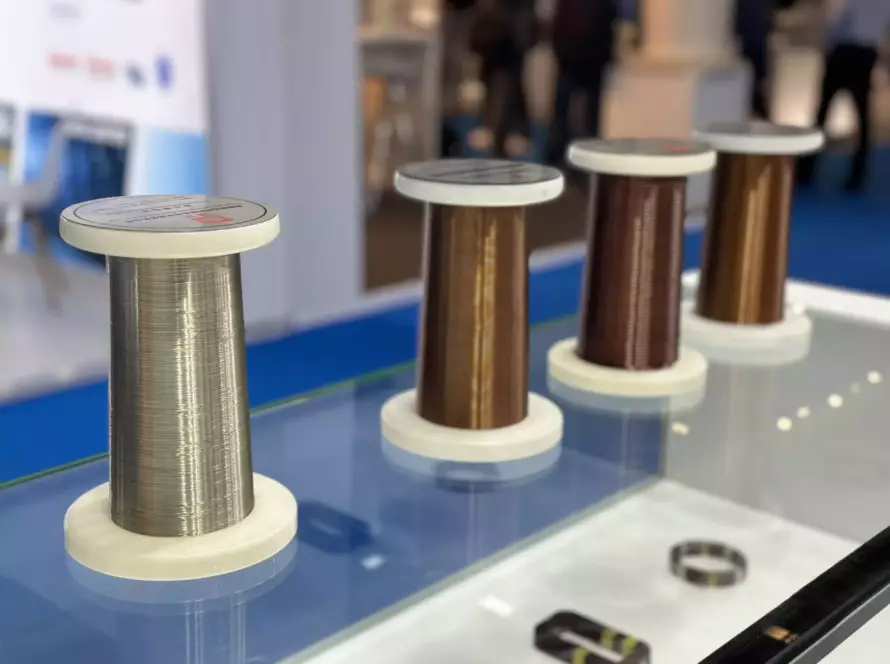
In the pursuit of more compact, powerful and efficient electronics, engineers are achieving breakthrough performance through an often-overlooked innovation: the shape of the wire. The transition from conventional round wires to rectangular magnet wire is unlocking transformative gains in applications ranging from electric vehicle (EV) motors to power grid transformers.
The Space-Saving Advantage
Rectangular magnet wire’s fundamental innovation lies in its space utilization efficiency. . Winding a coil with round wires is like stacking logs—no matter how tightly you pack them, you’re left with gaps of wasted space. These voids not only increase component size but also impede thermal management. . Flat wires, by contrast, stack like bricks, forming a dense, solid winding with virtually no empty space. This superior “fill factor” is a genuine game-changer.
By packing more conductive material—such as copper or aluminum—into the same volume, components can handle higher currents. The outcome is: a motor or transformer built with rectangular magnet wire can be drastically smaller and lighter while delivering equivalent power. For electric vehicles, this translates directly to lighter weight, which in turn extends range and improves handling.
This tight packing also offers a substantial thermal benefit. With fewer air gaps and increased surface area contact between wires, heat has a clear and efficient path to dissipate. This allows devices to run cooler, enhancing reliability and longevity. Engineers can now push designs further, creating more powerful electronics without the risk of overheating. The solid, rigid structure of these windings enhances durability and vibration resistance. —a critical feature for motors enduring the demands of road use..
Decoding the Types: Choosing the Right Flat Wire
Not all flat wire is created equal. Different applications demand distinct materials and properties, so selecting the right type is critical to maximizing your design’s performance.
Flat Enameled Copper Wire
Flat enameled copper wire is the industry workhorse, and for good reason. Copper is an exceptional electrical conductor, and when formed into a rectangular profile and coated with a thin layer of enamel insulation, it becomes the top choice for high-performance applications. The enamel coating prevents short circuits in the tightly packed coils, making it indispensable for demanding scenarios where power density and efficiency are paramount, such as EV traction motors.
Flat Enameled Aluminum Wire
When weight reduction is a priority, flat enameled aluminum wire takes center stage. Aluminum is significantly lighter than copper, enabling substantial weight savings, especially in large transformers. While aluminum conducts electricity at only about 60% the efficiency of copper, designers can easily offset this by using a slightly thicker wire. The result is a far lighter component, a critical advantage in the aerospace, automotive, and even portable electronics industries.
Bare (Pure) Flat Copper Wire
In some designs, an enamel coating is unnecessary. Bare flat copper wire is used in situations where the main goal is simply to transmit high currents through a compact space, such as in electrical grounding systems or as busbars within power electronics. With no coating to impede connections, these pure copper wires can be directly soldered or welded, ensuring simple yet robust joints.
The Innovation Frontier: Shaped Stranded Wire
In addition to solid flat wires, shaped stranded wire is emerging as a more advanced option for cutting-edge applications. At this point, wire design evolves into a highly specialized craft, with companies like Jingda engineering custom solutions that push the boundaries of technical possibility.
A Flexible, High-Tech Conductor
Shaped stranded wire is not a single solid conductor. Instead, it comprises numerous ultra-thin, individually insulated wires that are twisted together and then pressed into a rectangular or square final profile. This unique design endows the conductor with exceptional flexibility—a critical advantage when winding into the tight,intricate configurations demanded by modern, small electronics. This flexibility simplifies the winding process significantly compared to working with solid flat wire. .
Key Advantages
The multi-strand design brings more than just flexibility; it masterfully solves a high-frequency electrical challenge. At high frequencies, current tends to concentrate along the surface (or “skin,”) of a solid wire, increasing electrical resistance and causing energy waste. By contrast, the structured arrangement of shaped stranded wire—with its many tiny, insulated strands—distributes current more evenly throughout the entire conductor. This dramatically reduces such “AC losses,” enhancing efficiency in high-frequency devices.
- Exceptional Flexibility: Easily winds into complex, compact coil designs.
- Reduced AC Losses: Boosts efficiency by mitigating high-frequency skin and proximity effects.
- High Fill Factor: Retains the same space-saving benefits as solid rectangular wire.
- Custom Engineering: Can be tailored to meet specific electrical and thermal performance requirements
A “Wow” Application: Maglev Train Coils
A powerful real-world example of this technology is found in the magnetic levitation systems of Maglev trains. These trains literally float on a magnetic cushion, propelled by extraordinary powerful electromagnetic fields—generated by coils that must handle enormous currents with unwavering reliability. Shaped stranded wire is ideally suited to this task: its high density enables powerful, compact magnets; its flexibility makes building the massive coils manageable; and its low energy loss is vital to the train’s overall efficiency.
Critical Applications Driving Demand
The unique advantages of flat wire have made it an indispensable component in some of today’s most pivotal and rapidly growing industries.
New Energy Vehicle (NEV) Motors
In the pursuit of extended range and faster acceleration for NEVs, flat enameled copper wire delivers the power density needed to meet the demands. It enables allows for smaller, more potent motors that increase efficiency and performance, while its superior heat dissipation ensures reliable operation under real-world driving conditions.
Transformers & Inductors
From large-scale power grid transformers to miniature circuit board inductors, rectangular magnet wire enables component miniaturization without compromising power output. This is particularly valuable in an era of shrinking electronics—from switch-mode power supplies to renewable energy inverters—where space efficiency is paramount..
Photovoltaic (PV) Inverters & Energy Storage
Solar inverters and battery storage systems rely on high-frequency electronics to convert and manage energy. The high efficiency of shaped stranded wire in these applications minimize heat-related energy loss, resulting in more power being delivered to the grid and stored for later use.
Specification Checklist: Ordering the Perfect Flat Wire
Ordering the right flat wire requires precise specifications. As a precision-engineered product, clear details are crucial to ensuring the wire aligns with your design requirements. Here’s what you need to specify:
- Dimensions:
- Thickness (a): The smaller dimension of the rectangle.
- Width (b): The larger dimension of the rectangle.
- Corner Radius (r): The curve of the corners, which is important for ensuring a secure fit and protecting the insulation during winding processes.
- Material:
- Copper (Cu) or Aluminum (Al).
- Enamel Type & Thermal Class: These defines the insulation’s durability and heat resistance.
- Examples include Polyesterimide (PEW) or the more robust Polyamideimide (EIW/AIW).
- Thermal Classes (180, 200, 220, etc.) indicate the maximum continuous operating temperature in Celsius.
- Standards Compliance: If required, specify adherence to international standards such as IEC, NEMA, or JIS.
Unlocking Future Innovations
The shift from round to rectangular magnet wire represents a small yet transformative advancement in power engineering—one that impacts everything from electrical grid to the vehicles we drive. This technology isn’t just enhancing today’s products; it’s paving the way for future innovations in energy and transportation. By optimizing space utilization, managing heat effectively, and enabling more compact, high-performance designs, flat wire continues to drive progress in these critical sectors.