


In the constantly changing world of electrical manufacturing and engineering, the quest for materials that balance efficiency, reliability and cost-effectiveness persists. For decades, copper has reigned as the premier conductor due to its excellent conductivity. However, amid fluctuating commodity prices and growing demands for component lightweighting, an intriguing alternative has been emerged: copper clad aluminum (CCA) wire.
Demystifying CCA Wire: What Exactly Is It?
Copper clad aluminum (CCA) wire is basically a bimetallic conductor consisting of an aluminum core sheathed in high-purity copper cladding. Unlike an alloy or mixture, it is a composite product where the two metals are metallurgically bonded.
Its manufacture usually entails encasing a solid rod of aluminum in a tube of copper, which is then drawn through a sequence of dies. This process simultaneously reduces the wire diameter and forms a permanent, uniform bond between aluminum and copper. The thickness of copper cladding—typically comprising 10% or 15% of the wire’s cross-sectional area—is a critical parameter, significantly influencing its performance characteristics. The result is a wire that resembles solid copper in appearance and shares many of its properties, yet boasts a distinct set of technical attributes.
Copper vs. CCA Wire: A Head-to-Head Comparison
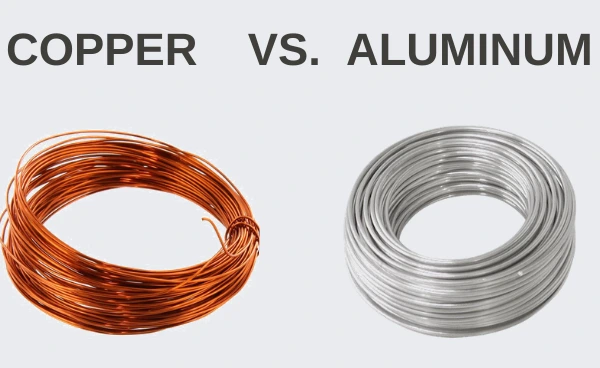
CCA wire vs. copper is a subtle argument. It most commonly boils down to pitting their inherent properties head-to-head against the requirements of a given application. As solid copper has been the industry standard, CCA offers an attractive value proposition across a range of critical factors .
| Feature | Solid Copper Wire | Copper Clad Aluminum (CCA) Wire |
| Cost | High (subject to market volatility) | Significantly Lower (due to aluminum core) |
| Weight | High Density (Approx. 8.9 g/cm³) | Lightweight (Approx. 3.3 g/cm³ for 10% copper) |
| Conductivity | 100% IACS Standard | Lower (Approx. 61% IACS) |
| High-Frequency AC | Standard performance | Good Performance (due to “skin effect” on copper surface) |
| Tensile Strength | Higher, more ductile, robust | Lower, more brittle, requires careful handling |
| Corrosion | Good corrosion resistance | Excellent resistance on surface, but exposed core can oxidize |
Addressing Common Concerns: Is CCA Wire Safe and Reliable?
The application of copper clad aluminum wire is not without controversy, primarily regarding safety and long-term reliability. A thorough understanding of these concerns and effective mitigation strategies is crucial for its proper implementation.
| Concern | Key Consideration & Mitigation |
| Oxidation & Termination | The aluminum core may form a high-resistance oxide layer if exposed to air.Mitigation Strategy: The copper cladding acts as a barrier to prevent oxidation. It is critical to use appropriate stripping techniques and use certified connectors that avoid cladding damage and ensure a stable electrical connection. |
| Code Compliance | CCA wire is not approved by all electrical codes for all applications (e.g., residential building wiring in some regions).Mitigation Recommendation: Always confirm that CCA is authorized by applicable national and local electrical codes for your specific application before use. |
| Higher Resistance | The higher electrical resistance of CCA wire compared to copper result ingreater voltage drop and heat generation under load.Mitigation Strategy: This may require using a larger gauge CCA wire to safely achieve the same ampacity as a smaller copper wire, making CCA unsuitable for high-power PoE applications. |
| Manufacturing Quality | The reliability of CCA wire depends on the metallurgical bond between copper and aluminum and the uniformity of the cladding. Mitigation Recommendation: Source CCA wire exclusively from reputable manufacturers who adhere to rigorous quality control standards. |
The Global Trend: Cost Reduction Meets Performance Needs
Global demand for CCA wire has been steadily rising, driven by a combination of economic and technological factors. In today’s competitive global market, cost reduction remains a primary driver. The significant price difference between copper and aluminum makes CCA wire an attractive solution for industries seeking to manage material costs—particularly in emerging economies where large-scale infrastructure projects are in progress.
Technological advancements have also played a crucial role in the growing acceptance of CCA wire. Improvements in manufacturing processes and a deeper understanding of the material’s properties have allowed engineers to identify and leverage its strengths. The industry trend is not simply about replacing copper, but about making informed engineering choices based on a comprehensive cost-benefit analysis.
Ideal Applications for Copper Clad Aluminum Wire
Although not a universal substitute for copper, CCA wire delivers superior performance in numerous applications where its unique properties offer a distinct advantage over solid copper.
| Application | Why CCA Wire is an Excellent Choice |
| Transformers | Its light weight allows for smaller, more compact, and less costly transformer designs, especially in high-frequency power supply applications. The skin effect makes it an efficient conductor for high-frequency currents. |
| Motors | In small motor windings (e.g., appliances, power tools), weight reduction enhances overall product efficiency. The lower material cost is a significant manufacturing advantage. |
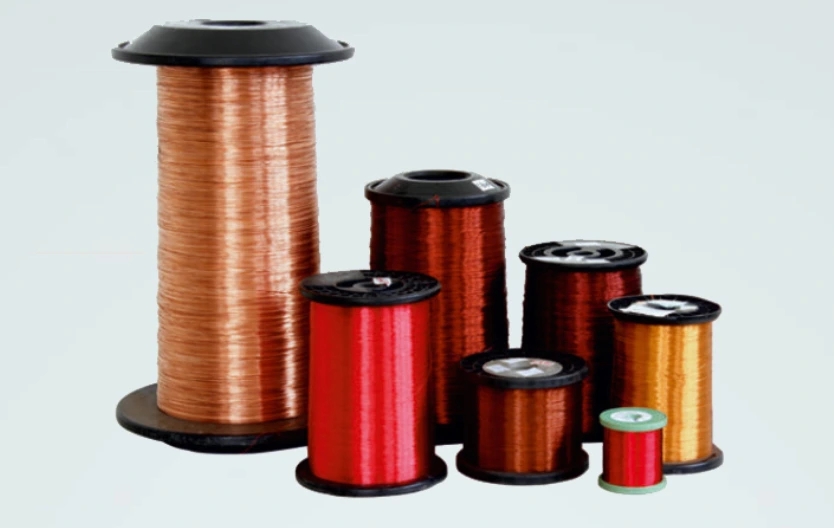
| Coils | CCA wire is ideal for speaker voice coils, where low mass is critical for rapid and accurate sound reproduction. It is also used in various electromagnetic coils and inductors, leveraging its light weight and superior high-frequency performance. |
Making the Right Choice: Considerations for Your Project
Selecting the appropriate wire is a critical engineering decision. When considering copper clad aluminum, a systematic assessment of project requirements is essential to ensure performance, safety, and cost-efficiency.
| Consideration | Key Questions to Ask |
| Application Suitability | Is this a high-frequency or a DC power application? Is weight a critical design factor? Does the application involve high mechanical stress or frequent flexing? |
| Electrical Load | What are the voltage and amperage requirements? Have you considered the higher resistance of CCA wire and potential voltage drop, , possibly by selecting a larger gauge? |
| Regulatory Compliance | Does the local electrical code permit CCA wire for this specific application? Are there any industry standards (e.g., for PoE) that prohibit or discourage CCA usage? |
| Total Cost of Ownership | Beyond the initial wire cost, have you considered the potential need for specialized connectors and the labor costs associated with installation procedures? |
| Supplier Vetting | Is the manufacturer reputable? Can they provide detailed specification sheets and quality control test reports to ensure a reliable product? |
A Smart and Evolving Choice
In conclusion, CCA wire emerges as an innovative and evolving solution for a growing number of modern electrical applications. Its compelling combination of cost-efficiency, lightweight design, and applicaton-specific performance makes it a viable and attractive alternative to solid copper. Though not a universal replacement, its intelligent application can lead to significant benefits.


 English
  Japanese
  Spanish
  Chinese