


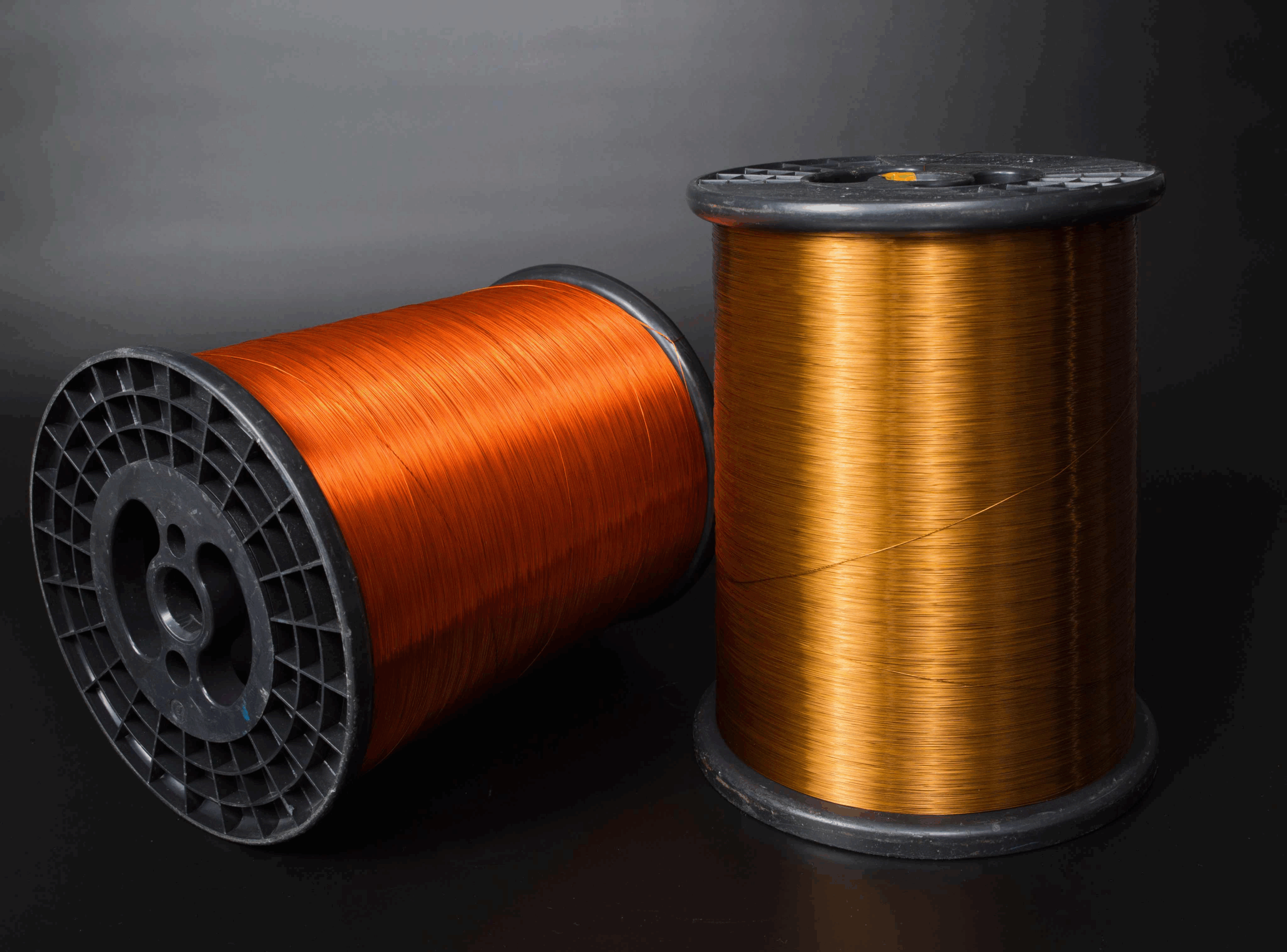
When choosing a winding material for a motor or compressor, you face a critical decision: should you use high-performance copper or cost-effective aluminum? This choice directly impacts your equipment’s efficiency, lifespan, size, and total cost of ownership.
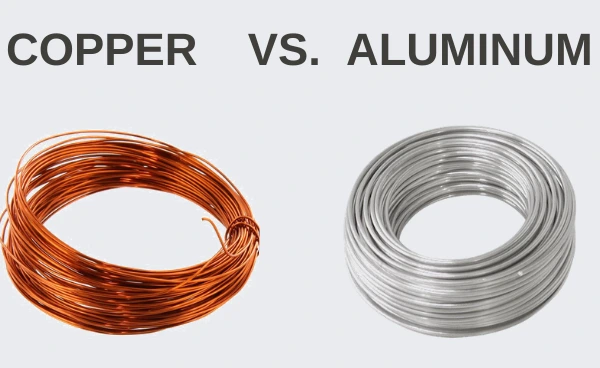
Here’s the bottom line: Copper is the performance champion, offering superior efficiency, heat dissipation, and longevity, but it comes at a higher upfront cost. Aluminum is the budget champion, significantly reducing initial costs and weight, but with trade-offs in efficiency and durability.
This guide provides a comprehensive comparison to help you make the best decision by balancing price and performance.
At-a-Glance Comparison Chart
| Feature | Copper | Aluminum | The Bottom Line |
|---|---|---|---|
| Electrical Conductivity (IACS) | 100% | 61% | Copper is far more conductive, leading to higher efficiency. |
| Weight (for equal conductivity) | 100% | ~50% | Aluminum is half the weight, a huge advantage for mobility. |
| Heat Dissipation (Thermal Conductivity) | Excellent (413 W/m·K) | Good (237 W/m·K) | Copper runs cooler, extending the motor’s lifespan. |
| Initial Cost | High | Low (typically 30-50% cheaper) | Aluminum offers significant upfront savings. |
| Long-Term Operating Cost | Low | High | Copper’s efficiency saves more money on electricity over time. |
| Size (for equal power) | Smaller | Larger (~60% more cross-sectional area needed) | Copper allows for more power in a smaller package. |
| Durability & Lifespan | Long | Shorter | Copper has better resistance to corrosion and fatigue. |
Deep Dive: 5 Key Performance Differences
1. Efficiency & Operating Costs: The Long-Term Money
Efficiency is the heart of a motor’s economic performance, and copper has an undeniable edge.
- The Conductivity Gap: Copper is the standard for electrical conductivity (100% IACS), while aluminum sits at just 61% IACS. To carry the same amount of current, an aluminum wire needs about 1.6 times the cross-sectional area of a copper wire.
- The Direct Impact on Efficiency: An aluminum-wound motor is typically 1.5% to 2% less efficient than an identical copper-wound motor. While this seems small, it adds up to significant costs over the motor’s life.
Real-World Example: Consider a 50 kW motor running 4,000 hours per year at an electricity rate of $0.10/kWh. - Copper Windings (95% efficiency): 50kW/0.95×4000h≈210,526 kWh/year
- Aluminum Windings (93% efficiency): 50kW/0.93×4000h≈215,054 kWh/year Conclusion: The aluminum motor costs an extra $453 per year to run. For most industrial applications, this added operational cost will erase aluminum’s initial price advantage within 2-5 years.
2. Weight & Size: The Equation for Mobility
When weight and space are primary concerns, aluminum shines.
- Density: Copper (8.96 g/cm3) is 3.3 times denser than aluminum (2.70 g/cm3).
- Lightweight Champion: Even after upsizing the wire to compensate for lower conductivity, an aluminum winding is still about half the weight of a copper one. This makes aluminum the ideal choice for applications where reducing weight is critical, such as in electric vehicles, drones, aerospace, and portable power tools. The trade-off is that the motor may need to be 10-15% larger to accommodate the thicker windings.
3. Heat & Lifespan: The True Test of Durability
Heat is the number one enemy of motor longevity. Copper’s superior ability to manage heat makes it a more reliable choice.
- Thermal Conductivity: Copper ($413 \text{ W/(m·K)}$) dissipates heat about 70% more effectively than aluminum ($237 \text{ W/(m·K)}$).
- Real-World Impact: Copper windings pull heat away from the core more efficiently, allowing the motor to run cooler. A cooler operating temperature means slower insulation breakdown and longer bearing life, which significantly extends the motor’s service lifespan. Under identical conditions, an aluminum-wound motor is estimated to have 85-90% of the lifespan of a copper-wound motor.
4. Connection Reliability: Where Details Matter
Most motor failures occur at the connection points.
- Oxidation: Aluminum forms a layer of aluminum oxide that is hard and electrically insulating. This can increase contact resistance over time, leading to overheating and connection failure. Copper oxide, in contrast, is conductive.
- Thermal Expansion & Creep: Aluminum expands more with heat and is more prone to “creep” (slow deformation under pressure). This means aluminum connections can loosen over time and require periodic inspection and re-tightening. Using aluminum requires specialized connectors, anti-oxidant compounds, and stricter maintenance protocols to ensure long-term reliability.
5. Initial Cost: The Most Obvious Appeal
The strongest argument for aluminum is its price tag.
- Raw Material Cost: By weight, aluminum is typically 30-50% cheaper than copper.
- Final Cost Savings: Even after accounting for the larger wire size needed, aluminum windings still offer a 15-25% cost saving on average. For high-volume manufacturers where initial cost is a primary driver, these savings can be a significant competitive advantage.

Copper-Clad Aluminum (CCA): The Best of Both Worlds?
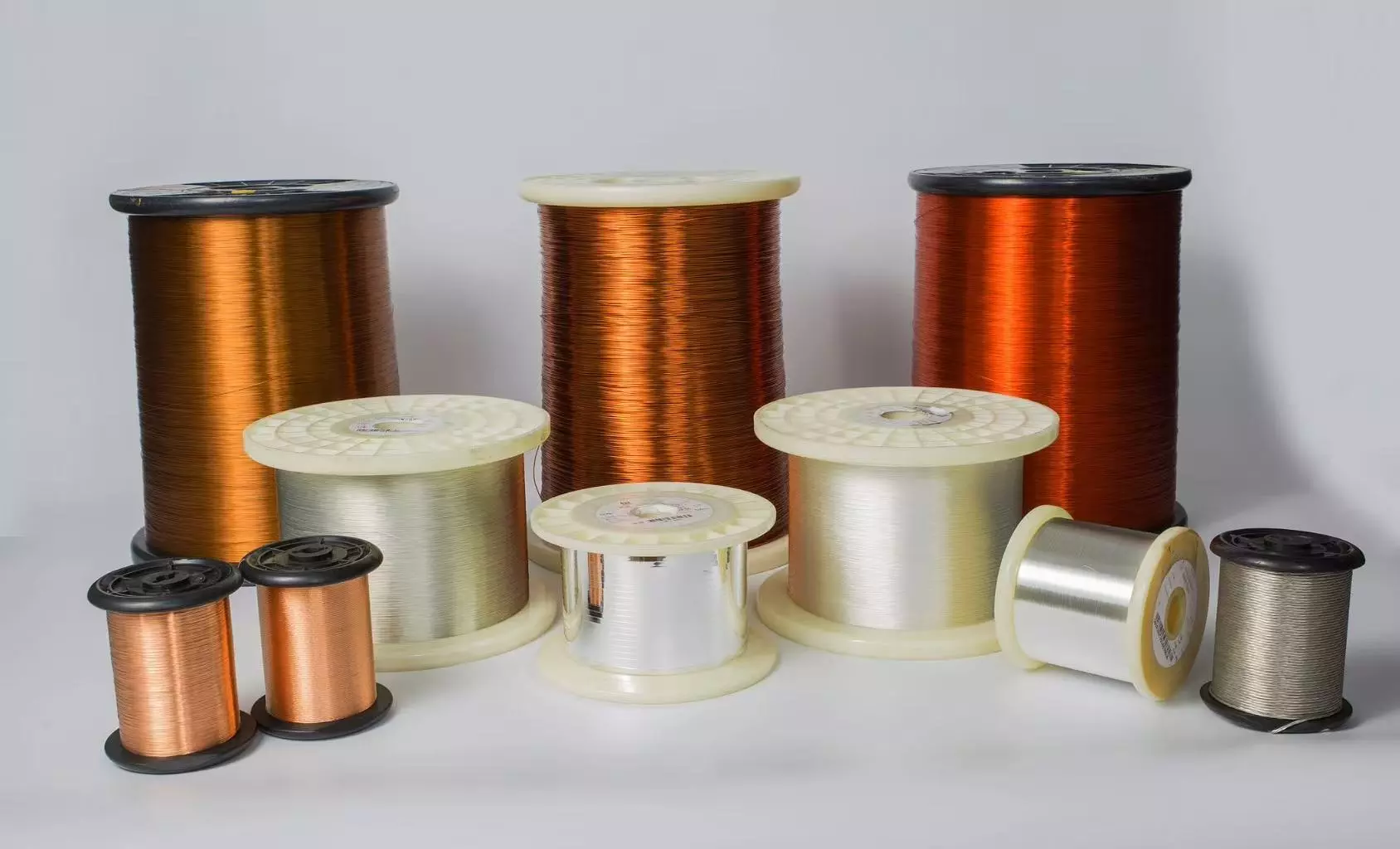
Copper-Clad Aluminum (CCA) is a hybrid wire with an aluminum core and a thin outer layer of copper. It aims to offer a balanced solution.
- Advantages: ○ Cost: Priced between pure aluminum and pure copper.
○ Weight: About 40% lighter than solid copper.
○ Connectivity: The copper surface allows for easier, more reliable connections than pure aluminum.
○ Conductivity: Better than pure aluminum. - Disadvantages: ○ Not as conductive or durable as pure copper.
○ Less established performance history compared to the pure metals.
○ Risk of delamination under extreme bending or temperature cycling.
Key Takeaway: CCA is a viable compromise for cost- and weight-sensitive applications that don’t demand the absolute highest performance, but it is not a direct replacement for copper in heavy-duty or critical systems.

How to Choose: An Application Checklist
| If your top priority is… | Then your best choice is… | Typical Applications |
|---|---|---|
| Maximum Efficiency & Low Operating Cost | Copper | Industrial pumps, fans, continuous-duty production line motors. |
| Light Weight & Portability | Aluminum | Electric vehicles, drones, portable power tools. |
| Strict Budget & Upfront Cost | Aluminum | Intermittent-duty home appliances, cost-sensitive consumer goods. |
| Harsh Environments & High Reliability | Copper | Mining equipment, chemical pumps, mission-critical server fans. |
| A Balance of Cost, Weight, & Performance | CCA | Some automotive wiring, coaxial cables, low-voltage transformers. |

Conclusion: There’s No “Better” Material, Only the Right Choice for You
The debate between copper and aluminum has no single winner. The optimal choice is entirely dependent on your application’s specific needs.
- Choose Copper when you are investing in long-term value. You get unparalleled efficiency, durability, and reliability that will save you more money over the equipment’s lifespan.
- Choose Aluminum when you are prioritizing upfront benefits. You get immediate cost savings and a significant weight reduction, but you must engineer and maintain the system to manage its performance trade-offs. Ultimately, the decision comes down to a simple question: Is operational efficiency more critical than initial capital cost? By weighing these factors carefully, you can select the material that delivers the most value for your specific project.


 English
  Japanese
  Spanish
  Chinese